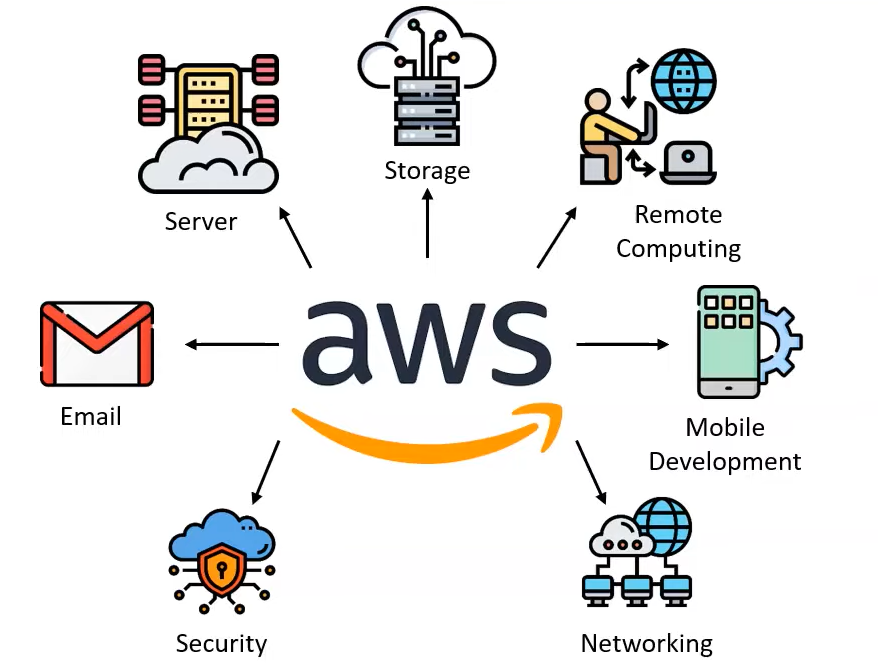
AWS Compute Cloud: The Engine of Modern Digital Transformation
In the vast and intricate constellation of Amazon Web Services (AWS), the AWS Compute Cloud stands not merely as a service, but as the foundational beating heart of its value proposition. It is the dynamic, elastic, and omnipresent engine that powers the transition from physical data centers to the ephemeral, code-driven infrastructure of the cloud era. More than a collection of products, AWS Compute is a comprehensive philosophy of processing—one that asserts that compute power should be infinitely scalable, granularly billable, and abstractable to the point of invisibility. From launching a simple website to simulating protein folding for drug discovery, the AWS Compute portfolio provides the precise tool for every conceivable computational task, reshaping how organizations conceive of, consume, and capitalize on raw processing power.
The Architectural Pillars: A Spectrum of Abstraction
The genius of AWS Compute lies in its layered approach, offering a spectrum of services that abstract away varying degrees of infrastructure management. This “compute continuum” allows architects to align their choice with specific needs for control, agility, and operational overhead.
1. Amazon EC2 (Elastic Compute Cloud): The Foundational Bedrock
As the original and most recognizable service, EC2 provides resizable virtual servers in the cloud. It is the virtualized data center workhorse, offering ultimate flexibility. Users select from hundreds of optimized instance types (General Purpose, Compute Optimized, Memory Optimized, Accelerated Computing, Storage Optimized) with precise vCPU, memory, and storage configurations. With features like Elastic Load Balancing, Auto Scaling, and Amazon Machine Images (AMIs), EC2 forms the core of lift-and-shift migrations and highly customizable architectures. It delivers maximum control but requires management of the OS, middleware, and runtime.
2. AWS Lambda: The Paradigm of Serverless Computing
If EC2 represents the virtualization of servers, Lambda represents the virtualization of execution. It is the pinnacle of abstraction, where developers deploy pure function-as-a-service (FaaS). There are no servers to provision, manage, or scale. Developers simply upload code, and Lambda runs it in response to triggers (e.g., an S3 file upload, an API Gateway request, a DynamoDB stream) with millisecond-scale billing. Lambda is the engine for event-driven architectures, microservices backends, and real-time data processing, embodying the true “no-ops” ideal where the focus is solely on business logic.
3. AWS Containers: The Agility of Modern Application Packaging
Recognizing the industry’s shift to containerization, AWS offers a suite of orchestrated services. Amazon ECS (Elastic Container Service) and Amazon EKS (Elastic Kubernetes Service) provide highly scalable and secure environments for running Docker containers. For a fully managed serverless container experience, AWS Fargate allows users to run containers without managing the underlying EC2 instances or clusters. This ecosystem provides the perfect balance of consistency, portability, and operational efficiency for modern, microservices-based applications.
4. Specialized & Edge Compute: Purpose-Built Power
Beyond general-purpose computing, AWS offers targeted solutions:
- AWS Batch: Enables scientists and engineers to run hundreds of thousands of batch computing jobs without managing compute resources.
- AWS Elastic Beanstalk: A Platform-as-a-Service (PaaS) offering that simplifies deployment and scaling for web applications by automatically handling capacity provisioning, load balancing, and health monitoring.
- AWS Outposts & Local Zones: Extends AWS infrastructure, services, and APIs to on-premises data centers and metropolitan edge locations for workloads requiring single-digit millisecond latency or local data processing.
- Amazon Lightsail: Provides simplified virtual private servers, ideal for simpler web applications, offering a straightforward, low-cost entry point into the AWS cloud.
The Strategic Advantages: More Than Just Virtual Machines
1. Unmatched Elasticity and Scale: AWS Compute services are intrinsically elastic. They can scale out (adding more instances) and up (increasing instance size) automatically in response to demand. This enables architectures that are both cost-effective (you pay only for what you use) and resilient (handling traffic spikes without manual intervention). The global scale of AWS’s Availability Zones (AZs) allows for geographically distributed, highly available compute deployments.
2. The Security and Compliance Fabric: Compute instances are not islands; they are integrated into the most comprehensive cloud security model in the world. This includes:
* The AWS Shared Responsibility Model, where AWS secures the infrastructure, and the customer secures their workload.
* Deep integration with AWS IAM for granular access control, Amazon VPC for network isolation, and AWS Shield & WAF for DDoS protection.
* Compliance readiness for frameworks like HIPAA, PCI-DSS, GDPR, and FedRAMP, inherited from the underlying infrastructure.
3. Economic Efficiency and Innovation Velocity: The shift from Capital Expenditure (CapEx) to Operational Expenditure (OpEx) is profound. Organizations avoid massive upfront hardware costs and gain predictable, pay-as-you-go pricing. More importantly, the reduction in undifferentiated heavy lifting—procurement, racking, stacking, patching—frees developer and IT teams to innovate faster. New features and applications can be prototyped, deployed, and scaled in minutes, not months.
4. Ecosystem Synergy and Hybrid Architectures: AWS Compute services are designed to seamlessly integrate with the broader AWS ecosystem. An EC2 instance can pull secrets from AWS Secrets Manager, write logs to Amazon CloudWatch, store data in Amazon S3, and be managed via AWS Systems Manager. This creates a cohesive, powerful, and automated operational environment. Furthermore, services like VMware Cloud on AWS and AWS Outposts provide elegant pathways for hybrid cloud strategies, bridging on-premises investments with cloud-native innovation.
Considerations for Strategic Deployment
- Cost Management and Optimization: The flexibility of AWS Compute can lead to cost sprawl without governance. Strategic use of AWS Cost Explorer, Reserved Instances, Savings Plans, and spot instances (for fault-tolerant workloads) is critical for financial control.
- Architectural Discipline: The vast array of choices demands disciplined architecture. Misapplication—using a monolithic EC2 instance where a Lambda function would suffice, or over-engineering a simple app on EKS—can lead to unnecessary complexity and cost.
- Skill Set Evolution: Successfully leveraging the full compute portfolio requires a shift in skills from traditional network and systems administration to cloud-native practices like infrastructure-as-code (IaC with AWS CDK or Terraform), observability, and security automation.
Conclusion: The Indispensable Foundation for the Digital Age
The AWS Compute Cloud is more than a utility; it is the operating system for the 21st-century enterprise. It dematerializes the most critical component of IT—processing power—and reconstitutes it as a malleable, intelligent, and on-demand resource. By offering a continuum from raw virtual machines to invisible serverless functions, AWS empowers organizations to match their compute strategy precisely to their business objectives.
It enables the startup to scale globally from day one, the enterprise to modernize its legacy portfolio, and the researcher to access supercomputer-level power on a budget. In doing so, AWS Compute has ceased to be a mere technical offering and has become a strategic catalyst, redefining what is possible in application development, data analysis, and business innovation. It is the engine upon which the future is being built, one elastic cycle at a time.