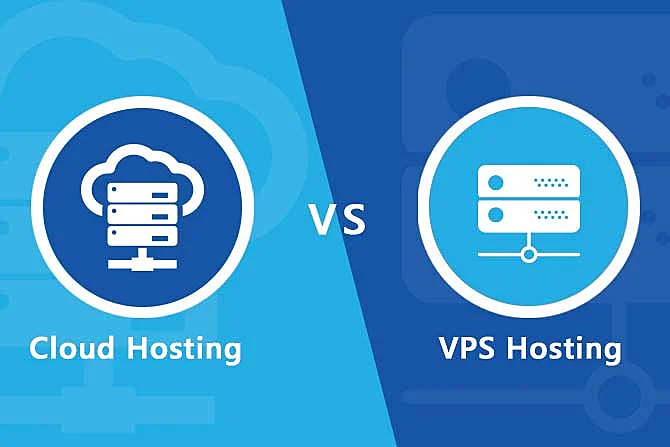
In the ever-evolving landscape of digital infrastructure, businesses are presented with a spectrum of hosting solutions, each promising performance, security, and scalability. From shared hosting’s economical entry point to the vast, abstracted resources of public clouds, the choices are manifold. However, for organizations where performance is non-negotiable, security is paramount, and control is critical, one model stands as an unwavering fortress: Dedicated Cloud Hosting. This hybrid powerhouse marries the raw, isolated power of traditional dedicated servers with the agile, scalable philosophy of cloud computing, creating a cornerstone solution for demanding digital enterprises.
At its core, Dedicated Cloud Hosting—often termed Private Cloud Hosting or Bare-Metal Cloud—provides clients with exclusive access to physical servers within a cloud provider’s data center. Unlike shared hosting or standard virtual private servers (VPS), where resources are sliced from a single machine and distributed among multiple tenants, a dedicated cloud server is wholly yours. There is no “noisy neighbor” effect, where another user’s resource-intensive application can throttle your performance. This isolation is the foundation of its primary benefits.
Unmatched Performance and Consistency
For resource-intensive applications—be it large-scale e-commerce platforms, high-traffic databases, complex financial modeling software, or immersive gaming servers—consistent performance is vital. Dedicated cloud hosting delivers this by providing guaranteed resources: specific CPUs, RAM, and SSD storage are reserved for your use alone. This eliminates the variability inherent in multi-tenant environments. You benefit from high I/O performance, crucial for database operations, and low-latency network interfaces, essential for real-time applications. The predictability of having a known, stable hardware profile also simplifies software optimization and capacity planning.
Elevated Security and Compliance
In an age of sophisticated cyber threats and stringent data protection regulations like GDPR, HIPAA, and PCI-DSS, security is more than a feature; it’s a mandate. The isolated nature of dedicated cloud hosting provides a inherently more secure foundation. Since the hardware is not shared, the attack surface from other cloud tenants is virtually eliminated. Clients have full control over the security stack, from the hardware firewall settings and intrusion detection systems down to the operating system’s kernel. This level of control is indispensable for organizations in regulated industries—finance, healthcare, government—that must adhere to strict compliance frameworks requiring audit trails, data sovereignty, and specific encryption protocols that may be difficult to implement in standard public cloud tenancies.
Total Control and Customization
Freedom to configure is a defining characteristic. With root or administrator access to a dedicated server, IT teams can tailor every aspect of the environment. This includes choosing a specific operating system (including legacy or niche OSs), installing custom firmware, configuring kernel modules, and optimizing the software stack for exact needs. Need a particular RAID configuration for redundancy? Or a specific GPU for machine learning workloads? Dedicated cloud hosting accommodates these hardware-level customizations, which are often impossible in standardized virtualized cloud instances. This makes it ideal for hosting proprietary applications or software with unique dependencies.
The Cloud Advantage: Scalability and Management
Where traditional dedicated servers of the past were often rigid, modern dedicated cloud hosting infuses this model with cloud agility. This is the critical differentiator. While the core server is physically dedicated, it is integrated into a cloud orchestration platform. This provides key cloud-native benefits:
- Scalability: While vertical scaling (upgrading the server itself) may require brief downtime for hardware swaps, horizontal scaling is achieved seamlessly through the cloud layer. You can easily spin up additional dedicated servers or integrate with complementary virtual cloud instances, storage, and load balancers through a unified API or portal, creating a hybrid, scalable architecture.
- Elasticity and Automation: Resources like bandwidth, IP addresses, and additional cloud storage can be scaled elastically. Infrastructure as Code (IaC) tools and automation scripts can manage provisioning and orchestration, bringing DevOps efficiency to the dedicated environment.
- Managed Services and Reliability: Reputable providers offer the hardware on a lease model, removing capital expenditure. They also ensure the underlying physical infrastructure—power, cooling, network connectivity—is enterprise-grade, with robust SLAs for uptime (often 99.99% or higher). Many offer fully-managed options, where experts handle patching, monitoring, backups, and 24/7 support, freeing internal teams to focus on core business applications.
Ideal Use Cases: Who Needs This Power?
Dedicated cloud hosting is not a one-size-fits-all solution. It is a strategic investment for specific scenarios:
- Enterprise-Grade Applications: Large ERP (SAP, Oracle), CRM systems, and big data analytics platforms (Hadoop, Spark clusters) that demand persistent, high throughput.
- High-Traffic Web Assets: Major e-commerce sites (especially during peak sales) and media streaming services that cannot afford performance dips.
- Security-Sensitive Workloads: Government portals, financial transaction processing, and healthcare record systems where data isolation is legally and ethically required.
- Game Hosting: Multiplayer game servers needing consistent, low-latency performance for all players.
- Infrastructure as a Service (IaaS) Providers: Companies that themselves act as hosting resellers or need to create customized virtualized environments for their own clients.
Weighing the Considerations
The advantages come with considerations. The cost is higher than shared or standard VPS solutions, making it less suitable for small blogs or nascent startups. It also demands a higher level of in-house technical expertise for unmanaged setups, or reliance on the provider’s managed services team. Furthermore, while scaling horizontally is fluid, upgrading the primary server’s CPU or RAM (vertical scaling) is not instantaneous and may involve migration or hardware intervention.
Conclusion: The Strategic Hybrid
Dedicated Cloud Hosting represents the zenith of control, performance, and security in the hosted infrastructure world. It successfully bridges the gap between the rigid power of old-school dedicated servers and the agile, service-oriented model of the public cloud. For growing businesses that have outgrown shared environments, and for enterprises where performance fluctuations or security risks are simply unacceptable, it is not just an option—it is a strategic imperative.
In the digital economy, your infrastructure is your castle. While shared hosting might be a modest dwelling and the public cloud a vast, bustling apartment complex, dedicated cloud hosting is your fortified, customizable, and scalable estate. It provides the unwavering foundation upon which trust, performance, and ultimately, success, are built. As workloads become more complex and cyber threats more persistent, its role as the cornerstone of demanding digital operations will only become more pronounced.